Wednesday, August 27, 2008

Words That Resonate

I was thinking recently about the way preached words can inspire - and reflecting personally on examples in my life. Not so much great sermons although they may have been. But the measure in the end of a successful preached message is not in the performance or even the exegesis. Both are critically important and I push myself to get better for the sake of the listeners! But the measure of a sermon for me is the mystery of God working through it - did I get out of the way enough, did I listen hard enough in my preparation, did I 'hear' the need that I was to speak to clearly enough - that God might be freed to move.

A friend then mentioned he'd done a top 10 sermons, so I thought to record the 5 most personally impacting messages that I can recall (cos how many I have 'forgotten'):

Dean Drayton - 1992 at a Methodist Aldersgate Revival Camp at Lake Taupo - Dean was the visiting speaker, an Evangelical from the Uniting Church in Australia. Still reeling with the loss of my Dad and still very new to faith, Dean exposed a raw nerve in me that helped me discover my identity as a child of God.

Paul Windsor - 2001 at an Auckland District Camp of the Wesleyan Methodist Church out at Chosen Valley. Paul introduced me to conjunctive theology with his message from John 1 on being grace and truth. Living in the tension of 2 apparently conflicting impulses and being shaped by that tension to be a more faithful reflection of Christ. A single theological insight that has massive application across the spectrum of life and ministry.
Rob Bell - 2003 in Chicago at a Willow Creek Preaching Conference, Rob Bell preached one of the most amazing messages of all time on the atonement. It opened up for me the depth and resonance of the OT with the NT and I was astonished at the clarity of the links between Leviticus and Hebrews. He also had a goat on stage which is always going to win my vote, especially being there in person!

Melissa Powell - 2005 at cessioncommunity. Melissa preached on the church as salt and light - the need to be both and the tension that exists for the church in being both: preserving society from the rot AND being beacons that banish darkness. If I hadn't been the pastor of the church, I would have signed up on the spot to help take the vision forward. It told me I was a believer in what God was doing with my life.

So there it is, my top 5...hang on thats only 4. The #1 most impacting message of all time? It was one of mine. My first. It was appalling. I failed to communicate well. I was insufficiently prepared. It made no impact. It drew no mentoring response. And I didn't preach again for years and years. But it shaped me in ways I cannot even begin to explain - it primed me for ministry to be expressed as call rather than competence (cos only call could draw me back to it). But it prepared me for the hard work of competence in answer to the call.

Tuesday, August 26, 2008

Fur Patrol

If this wasn't so disturbing it would be funny...OK its still funny, especially if you know feline vigilante which I do! Can you imagine if the guy was say a pastor or something?

Miaow.

Monday, August 18, 2008

The New Orthodox Rob Bell

What a relief that I can read and listen to Rob Bell again, thanks to Manna Music and the 80:20 rule. This just in from my Inbox today.


Friday, August 15, 2008

Witches and stuff

So my radio journey is apparently not over! I'd been reflecting during the week on the "learnable-teachable" blurb from last week and the drama which inspired it - as much as I like Bill English as a nice person, reading the paper this week left me wondering again about what was learned. Reports showed the similarity of off the record comments regarding Don Brash's failings that seemed markedly similar to his comments on Key's apparent inability to understand Working For Families. Now of course, he has recanted and says he will never challenge Key's leadership. However, that doesn't rule someone else doing that on his behalf...

Anyways, this week we talked about witches and fairies and stuff! The inspiration? Massey University's new course on witchcraft. I'm not particularly alarmist about these sorts of things I'm afraid. The course designer says its all about historical enquiry and seeing people in their contexts, even if one of the assignments is to create a spell or curse (backed up by research).

I remember the Harry Potter emails that circulated in the past claiming that the Harry Potter spells were real and quoting the head of the UK Satanist Society on youth membership increasing on the back of a Potter-inspired orgy of occultic interest. Christians were the main disease vector for this hoax.

In my atheist existence, reading fantasy novels probably kept alive a spark of agnosticism within me, that there was more to life than mere chemical existence. It didn't do me any harm anyway. And I'll mostly look for the search more than I'll focus on the sin (ie the particular spiritual activity) of someone exploring spiritual practices that are dodgy. In other words, an interest in spiritual things often points us to the emerging sense of spiritual need that Christ can fulfil in that person.

With witchcraft, the basic human yearnings for identity (who am I?), righteousness (Am I OK?) and power (Am I strong/in control?) are stil met, albeit in ways that I would say are a blind alley. An often self-conscious feminism present in witchcraft can be particularly powerful in providing identity. And many churches are not good at affirming women.

The concerns lie in the potential for damage of the young. Does a witchcraft course normalise something in society? I'd say no more than many other things and probably less than some (like drug in schools). But parents are always faced with these kinds of dilemmas a they contemplate what can look like the thin of the wedge - fairies lead to Harry Potter, Harry Potter leads to occult. At the same time, making something forbidden when everyone else is into it, can have its own perverse attraction. This will always be an issue for parents.

One principle that can operate is age appropriate boundaries. Actually, this can apply to reading the bible with kids. David and Bathsheba doesn't really work in the original. So the same approach can apply to this area were parents have concerns. Also,the opportunity for dialogue. Go see and experience some of these things with kids and take the opportunity to engage in some chat about the extremes.

Anyways, thats where it went. Because Aaron and I don't quite agree on this stuff it was possibly slightly better radio!

Thursday, August 14, 2008

Which Jesus?

Recently I completed an essay for a Christology paper. It was all about reconciling the Christ of the gospels with the Christ of faith. Some of the thought processes really engaged me. Here's a slice of some of the thoughts.

The quest for the real Jesus is influenced more by contemporary understandings of sources of truth than it is through any particular allegiance to ‘Jesus figures’. Every culture offers both catalytic and corrective impulses towards Christological insight. In some cases these insights bring important correctives on the back of cultural correctives where the pendulum swings back from a position of extreme rigidity. In other cases they catalyse new ways of thinking that enrich an accumulated Christology without subtracting from the historical Jesus. On occasion, these new insights reach too far and become the basis for future correctives. However, every culture needs a freshened (Note: freshened does not mean ‘new’) Christology to redeem its particular fallenness. Culture is not neutral however – so the danger is inherent where the fallen nature of culture creates God in its own image. In so doing, the historical Jesus is fatally redrawn as something less than the incarnate God. But just as Christ is the redeemer of culture, so our ‘Christologies’ must engage with cultural currents. We cannot avoid it.


What then are the limits of these freshened Christologies?

First, the response of culture in the formation of contemporary Christology should never seek to subtract from the incarnate Jesus of Nazareth - that is the Jesus who walked the earth. It is never acceptable to sideline him as a figure of myth, nor attribute a disconnection from the pre existent Word. In this respect, scholars such as those who sit within the Jesus Seminar are in serious error, with their serious flaws in methodology and a seemingly democratic method of determining truth
that seems to drink too thirstily from the modernist stream which waters its imperatives. In other words, there must be no discontinuity with Jesus of Nazareth.

Second, we should embrace local Christologies that give meaning to Christian experience and dignity to pre Christian culture. This dynamic can be seen vividly in relation to African culture and some other premodern cultures. But there is also a tendency for cultural expression to give way to cultural obsession. Whenever culture captures our Christologies in a way that leads us away from the redemptive power of Christ into the fallen world of cultural idolatry we risk nominalism and syncretism. This applies to post modern cultures as much as it applies to pre modern and modern cultures.

Finally, we must remain aware that Jesus of Nazareth, not only did things, he said things. If we understand him as the pre existent Word then what Jesus said then, must resonate with what we perceive him as saying now to us. Just as we must guard against being in relationship with a solely doctrinal Jesus, we must also be wary of the “Jesus in my head” who speaks in conflict with Jesus of the Gospels. This offers a warning for emergent theologians who seek redemption of their cultures by Christ AND the new conservatives who often seem to seek an homogenising of culture and belief.

Ultimately, the relationship between the Jesus of history and the Christ of faith is held in creative tension by the doctrine of the incarnation. The incarnate Word has been active in the redemption of cultures, societies and individuals since the Fall. Every culture, be it covenantal Israel, first century Palestine, enlightenment Germany or post Christian New Zealand is the focus of Christ’s redemption. We should expect our Christology to speak out of and to the need for the redemption of our culture. Indeed we must embody a fully-orbed approach to the distillation of truth that synthesises the Jesus of Nazareth found in the scriptures, with the Christ of faith that we experience, alongside the Christ who emerges from the tradition of the great Councils and creeds of the Church and the reason of those who seek for greater missionary impact in our cultures.

Monday, August 11, 2008

The Doggy Prayer

I mentioned human sentience as being at the root of the human search for identity on Sunday. And indeed the whole notion of free will exercises atheists and Christians alike. But what about dogs? We always give Rhys the option of what prayer he will pray at bedtime - we have a number of prayers that are mostly named by him and instigated by him. Recently it was the doggy prayer:


Dad: So what prayer do you want to pray?

Rhys: The doggy prayer

Dad: The Boz prayer?

Rhys: No the doggy prayer

Dad: OK [I've learned to go along with these things...]

Rhys: Thank you God as this day ends woof woof

For my family and my friends woof woof

Taking time to sit and pray woof woof

Thank you God for this great day woof woof

Dad: Thank you for Rhys...

Rhys: No, I'm a doggy not Rhys

Dad: Thank you for Rhys the doggy...

Together: Amen!

Thursday, August 07, 2008

Teachable?

He who ignores discipline despises himself, but whoever heeds correction gains understanding (Proverbs 15:32)

This verse was the thought behind today's radio blurb with Aaron Ironside - I thought it a bit dumb not to recycle the thoughts here - should have done it for the last 5 weeks really, especially now that my regular slot is "done" for a while. I'll miss the paycheque too! Hang on, what paycheque?!

Inspired or was it disillusioned by the sight of politicians surrendering to a taste of discipline this week after the infamous taping saga, I began to wonder what it takes for people to learn life lessons. And what I decided was there are 2 types of people in this world: people who are "teachable" and people who are "learnable". In fact there's only one kind, but some are learning to be more teachable.

To be learnable is to be human. To learn from mistakes, bad experiences, pain, pleasure. Sometimes we learn some twisted things. Sometimes we learn some great lessons and vow never to repeat our mistakes. But learnability for all its great attributes, is limited to what the self is able to process.

To be teachable though, thats another thing altogether. To find in us the humility to accept the guidance, correction, discipline, wisdom of another. Now that is something worth learning.

And yet some things can't be microwaved. There is still the need to learn for ourselves what only experience can teach us. Its great to stand on the shoulders of others, but some things, like character are never imparted. They have to be grown personally. The perseverance that comes from...well...persevering, the skill that come from practice...the wisdom that comes from experience, bitter and exultant...these things take time.

When I think more deeply about it, I guess I discover in me that teachability is something that also grows with time. Its rare to find a truly teachable person at a young age. As I've started my 3rd and final career as a pastor, I have found the value of putting myself in teachable opportunities - the stakes are too high really to do otherwise. And the realisation of one's own fallibility too apparent. I invest a lot more time in teachableness these days...some formal stuff and even last night over a leisurely beer with a good friend!

Anyways, thats not so much what I shared but the personal thought process behind it. Actually, I'm tempted to delete it, which is how I feel most times after these radio slots - but every time I get email, texts and phone calls from people who heard it. Kind of weird, but its good if it helps.

Saturday, August 02, 2008

Thursday, July 31, 2008

Tuesday, July 29, 2008

All Blacks - Experience and a Kicking Game

So the AB's team for the rematch with the Aussies is out:

Leon MacDonald,
Mils Muliaina,
Conrad Smith,
Ma'a Nonu,
Sitiveni Sivivatu,
Dan Carter,
Jimmy Cowan/Piri Weepu/Andrew Ellis,
Rodney So'oialo,
Richie McCaw (captain),
Jerome Kaino,
Ali Williams,
Brad Thorn,
Greg Somerville,
Andrew Hore/Keven Mealamu,
Tony Woodcock.

Reserves : Hore/Mealumu, John Afoa, Anthony Boric, Adam Thomson/Daniel Braid, Cowan/Weepu/Ellis, Stephen Donald, Richard Kahui.

Experience is the key here with all the new boys except Kaino (who played well on Sunday) gone. Muliaina is on the wing simply because he has to be on the field, but MacDonald adds his experience to the mix plus his kicking game. So'oialo returns to 8 where his security at the back of the scrum will enhance distribution. The Centre combination is restored and given a chance to function properly from the start of the game. Oh...and the captain is back.

This is a solid team with a much better balance. I'd have loved to see Afoa in, but if you're going to play Somerville and Afoa in the same game, then Somerville needs to start.

Lauaki has s(l)unk from sight.

Mortlock is back for the Aussies. Elsom is out with Phil Waugh in for him. That will increase the Aussie mobility in the loose, but they will lose some of their destructiveness with the ball in hand and on the tackle.

Look for an AB win at home as the boys come out hurting.

Wednesday, July 23, 2008

Its My Birthday and I'll Scoff If I Want To

I think she likes cake...

I Like Cyberpunk

Now the comment from Vania on the last post forced me to admit that the xeromag link is a bit dodgy but ONLY if you surf away from my link - thats your choice! I'm certainly not into xero and its more grubby emphases, but I am into cyberpunk which was one of the original foci of the magazine.

Cyberpunk is a sci-fi genre. The name is derived from - you guessed it already - cybernetics and punk. The term was originally coined by Bruce Bethke as the title of his short story "Cyberpunk," so you can read an example by clicking on the link. Cyberpunk is dark sci fi usually set in anarchic societies with a lot of high tech wetware in evidence (cybernetics).

So yes, films like Matrix and the groundbreaking Bladerunner are examples of cyber punk on the big screen. Johnny Mnemonic would be another less well known example.

Its all very anti establishment, with lots of hackers, faceless corporations, mercenaries, AI's and androgynes. One of my favourite writers is William Gibson. His Neuromancer is perhaps the most well-known work in this field. And the quote down a few posts from Bruce Sterling is also classic cyber punk. If you like edgy fantasy, chances are you'll like cyber punk. But it tends to be a bit more "heady", gritty and downright disturbing. Most often though its funny with its dark satirical overtones. I like laughing when I read.

Friday, July 18, 2008

The Life of Brian

I sat down with a degree of anticipation to watch the latest interpretation of the life of Bishop Brian Tamaki. I was disappointed. I later discovered the footage was dated - 2005 vintage which explained some of it. But mostly I was disappointed by the banal approach of Ross Jennings who's doco it was. An example makes the point:

Jennings commented on Tamaki's flame-decorated Harley: "That looks like a bike the devil would ride."

Tamaki: "What sort of a question is that, Ross?"

Jennings: "Do you feel as though you've got a monster between your legs?"

Tamaki: "Shucks, what sort of question is that?"

Silly stuff.

The shallow approach persisted throughout. Just when it was threatening to get interesting and informative Jennings moved on. For example, the structure of the Destiny trust board and the relationship of Tamaki inc and the Destiny Gym, Proton was briefly canvassed and then lost amidst another banal observation: you mean the church pays no tax on its tithes? Of course it doesn't you idiot - no church or charity is taxed on its donations. But you can bet the Tamakis pay their share of tax on any income they receive from the church. Both of which Jennings knows only too well.

What seemed to be coming from the Tamakis was they are shareholders in the company that runs the gym, completely separate from the church. Which is OK by me. And that Tamaki makes money off his books and things - which is also OK by me (although it is a matter of degree and personal taste how much one buys into this - he's certainly not alone though!)

The most interesting comments were the very learned and charitable comments by openly gay Christian academic Peter Lineham, who brought a deal of understanding to the table. Of particular interest to me were comments on the Maori and Pacific cultural elements to Tamaki's role-status. Only I couldn't decide who had the more flamboyant hair style - Tamaki or Lineham with his red dyed perm! Lineham also noted that tithing, reformed substance abusers would likely be much better off financially with Tamaki, even paying the tithe. The appearance of ex gang members with stories of reformation, repaired marriages and legit jobs reminded me that there are winners in the Tamaki story.

Tamaki showed just a little of the hurt he perhaps feels at his villification, with an amusing anecdote about being seated next to the late Maori Queen, forcing Helen Clark and other high brow Labourites to acknowledge him to their chagrin (as Tamaki tells it). He has a photo on the wall.

I found some of the church scenes a little disturbing. Perhaps just personal taste? Perhaps a concern at what could be interpreted as manipulation and play acting. Almost impossible to say. So I won't.

But all in all, a disappointment. I've met Tamaki on a number of occasions and enjoyed dealing with him. It seems to me the most real picture we saw of him from Ross Jennings was when he was hanging with his mates, out on the harbour fishing, and eating raw mussels off his bait knife. There's still a sense for me - you can take the boy out of Tokoroa, but you can't take Tokoroa out of the boy.

Thursday, July 17, 2008

I Am Not An Evil Overlord!

It's true! I swear! Recently I've been delving into my inner world just a little as part of my ministerial supervision. This has proved to be a good experience. Especially in recent weeks completing and then beginning to process my MBTI profile. Somewhere along the way I got mis-categorised as an ENTJ - which is fine - ENTJ's are good people too. And for me, its an easy mistake to make if you see a more externalised view of me. But as you get closer its pretty clear that the J is really a P which takes me away from "The Evil Overlord" description and into "Mad Scientist" territory (check out the alternate definitions). It is actually a very pragmatic tool for understanding "fit" in certain roles and how you relate to others who may be different to you. It has already led me to initiate a conversation with a person to rationalise my involvement with what they're doing - so they get the best out of my limited availability rather than the worst!

I found a good description of the ENTP which captures much of the stuff I'm discovering:

The Visionary

As an ENTP, your primary mode of living is focused externally, where you take things in primarily via your intuition. Your secondary mode is internal, where you deal with things rationally and logically.

With Extraverted Intuition dominating their personality, the ENTP's primary interest in life is understanding the world that they live in. They are constantly absorbing ideas and images about the situations they are presented in their lives. Using their intuition to process this information, they are usually extremely quick and accurate in their ability to size up a situation. With the exception of their ENFP cousin, the ENTP has a deeper understanding of their environment than any of the other types.

This ability to intuitively understand people and situations puts the ENTP at a distinct advantage in their lives. They generally understand things quickly and with great depth. Accordingly, they are quite flexible and adapt well to a wide range of tasks. They are good at most anything that interests them. As they grow and further develop their intuitive abilities and insights, they become very aware of possibilities, and this makes them quite resourceful when solving problems.

ENTPs are idea people. Their perceptive abilities cause them to see possibilities everywhere. They get excited and enthusiastic about their ideas, and are able to spread their enthusiasm to others. In this way, they get the support that they need to fulfill their visions.

ENTPs are less interested in developing plans of actions or making decisions than they are in generating possibilities and ideas. Following through on the implementation of an idea is usually a chore to the ENTP. For some ENTPs, this results in the habit of never finishing what they start. The ENTP who has not developed their Thinking process will have problems with jumping enthusiastically from idea to idea, without following through on their plans. The ENTP needs to take care to think through their ideas fully in order to take advantage of them.

The ENTP's auxiliary process of Introverted Thinking drives their decision making process. Although the ENTP is more interested in absorbing information than in making decisions, they are quite rational and logical in reaching conclusions. When they apply Thinking to their Intuitive perceptions, the outcome can be very powerful indeed. A well-developed ENTP is extremely visionary, inventive, and enterprising.

ENTPs are fluent conversationalists, mentally quick, and enjoy verbal sparring with others. They love to debate issues, and may even switch sides sometimes just for the love of the debate. When they express their underlying principles, however, they may feel awkward and speak abruptly and intensely.

The ENTP personality type is sometimes referred to the "Lawyer" type. The ENTP "lawyer" quickly and accurately understands a situation, and objectively and logically acts upon the situation. Their Thinking side makes their actions and decisions based on an objective list of rules or laws.

The ENTP, who does not naturally consider the more personal or human element in decision making, should take care to notice the subjective, personal side of situations. This is a potential problem are for ENTPs. Although their logical abilities lend strength and purpose to the ENTP, they may also isolate them from their feelings and from other people.

The least developed area for the ENTP is the Sensing-Feeling arena. If the Sensing areas are neglected, the ENTP may tend to not take care of details in their life. If the Feeling part of themself is neglected, the ENTP may not value other people's input enough, or may become overly harsh and aggressive.

Under stress, the ENTP may lose their ability to generate possibilities, and become obsessed with minor details. These details may seem to be extremely important to the ENTP, but in reality are usually not important to the big picture.

In general, ENTPs are upbeat visionaries. They highly value knowledge, and spend much of their lives seeking a higher understanding. They live in the world of possibilities, and become excited about concepts, challenges and difficulties. When presented with a problem, they're good at improvising and quickly come up with a creative solution. Creative, clever, curious, and theoretical, ENTPs have a broad range of possibilities in their lives.

Tuesday, July 15, 2008

The One Year Old

Raegan Emma Claire was ONE today! She had a Happy Birth-day largely on account of her special gift to her parents: sleeping through the night! She then proceeded to develop a chesty cold as the day went on and it doesn't look like tonight will be as good a night's sleep...highlights of the day for Raegan included her new "Little People" house which she has very much enjoyed playing with (when her big brother will let her) and her full contact experience with Chocolate cake!


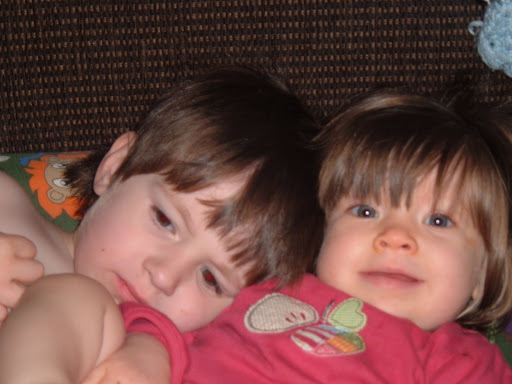
The photo really says it all about Raegan - she is a very smiley, good-natured person - a grin is never far from her face. She loves people in a way that is different from Rhys - he loves their attention - she's happy with their company. That said she'll take attention when its offered!

She is taking her first steps these past weeks. Mad dashes between people and objects, often capped with a desperate lunge. Words like "baby", "bye", "Ta" and "amen(!)" are amongst her repertoire. The last "amen" is not in any way due to an excess of spirituality but rather her love of food! Her first recognisable sound/word was "mmmmmmm" - which for her meant food. So she will often say "amen" before grace, so eager is she to eat.


She is both curious and determined. Quite the climber - in fact she climbed one of our flights of stairs recently when someone left the gate open... When she sees something she wants to explore or grab she will make for it with single-minded intent and climb over or through anything thats in her way!

She's quite happy rough-housing as well - comes from having an active little brother! But they are great mates and at this stage at least will happily play together for much of the time. We are very fortunate to have such wonderful children - Happy Birthday Raegan!